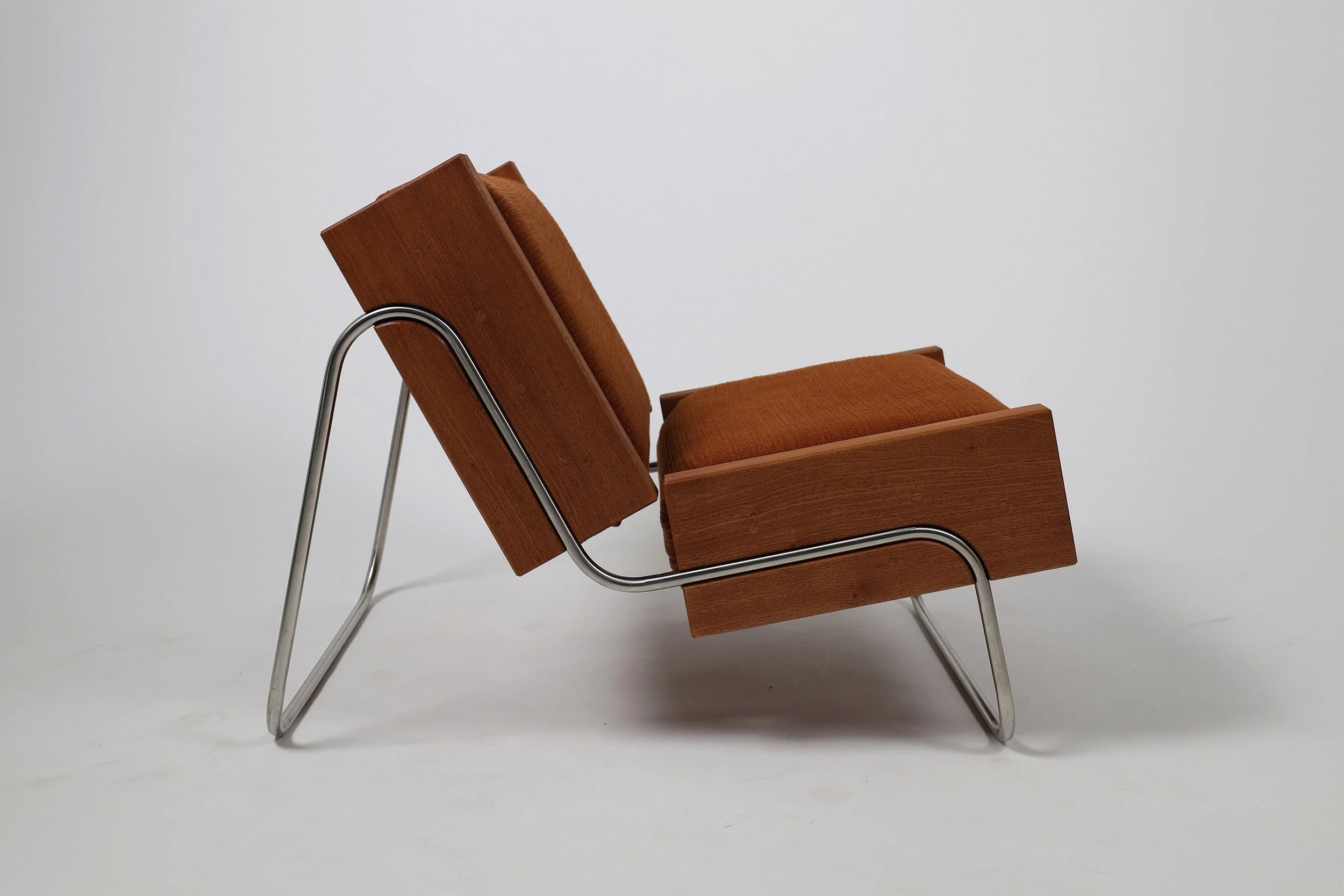
Blues Chair
Series | Archetypes in Translation
Materials | Sapele, stainless steel, upholstery
About
The Blues Chair is part of Archetypes in Translation, a collection exploring how structural archetypes from other disciplines can be translated into physical objects. Rather than borrowing their visual language, the project breaks these archetypes down into the underlying rules and principles that make them recognisable, using these as constraints for design.
The chair translates the AAB form, a three-line lyrical structure common in blues music. The first line presents an idea (A), the second repeats it, reinforcing its meaning, while the third (B) responds to, contrasts with, or recontextualises what came before. Its structure therefore depends not only on repetition, but on the ability of a final statement to alter how the preceding ones are understood.
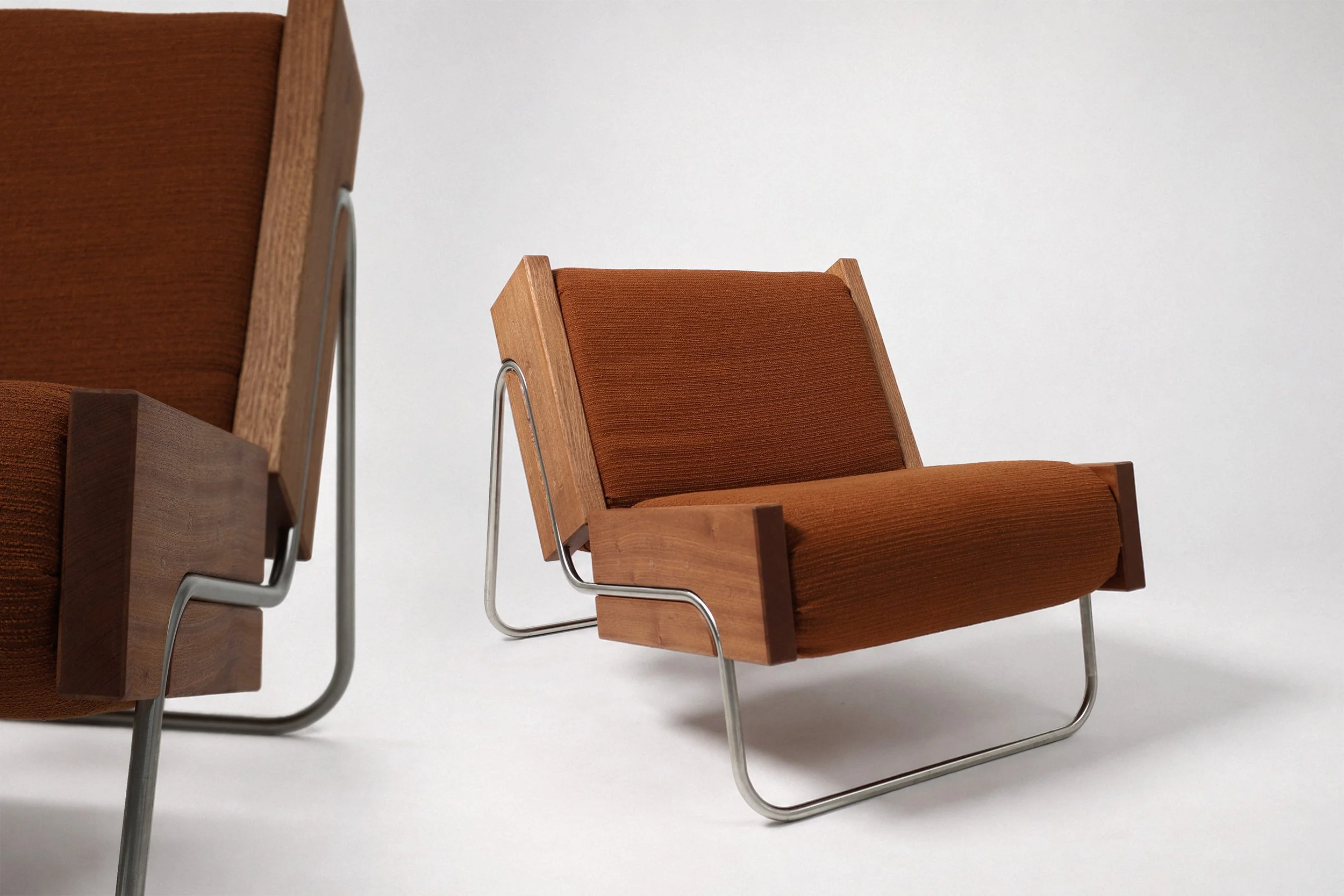
This relationship is translated into three physical components. Two identical upholstered forms represent the repeated A statements, each containing an identical routed groove. A bent stainless steel frame becomes the B element, locating within these grooves to connect and position the two forms without additional fixings.
Although the upholstered components are physically identical, their relationship with the frame causes them to assume different roles: one becomes a seat and the other a backrest. The B element therefore does more than connect the repeated forms; it recontextualises them, changing how each is understood and used. In this way, the logic of AAB determines both the construction of the chair and the relationship between its components, demonstrating how context can transform the meaning and function of otherwise identical parts.