Sonnet Chair
Series
| Archetypes in Translation
Materials
| Sapele, stainless steel, upholstery
About
The Sonnet Chair is part of Archetypes in Translation, a collection exploring how structural archetypes from other disciplines can be translated into physical objects. Rather than borrowing their visual language, the project breaks these archetypes down into the underlying rules and principles that make them recognisable, using these as constraints for design.
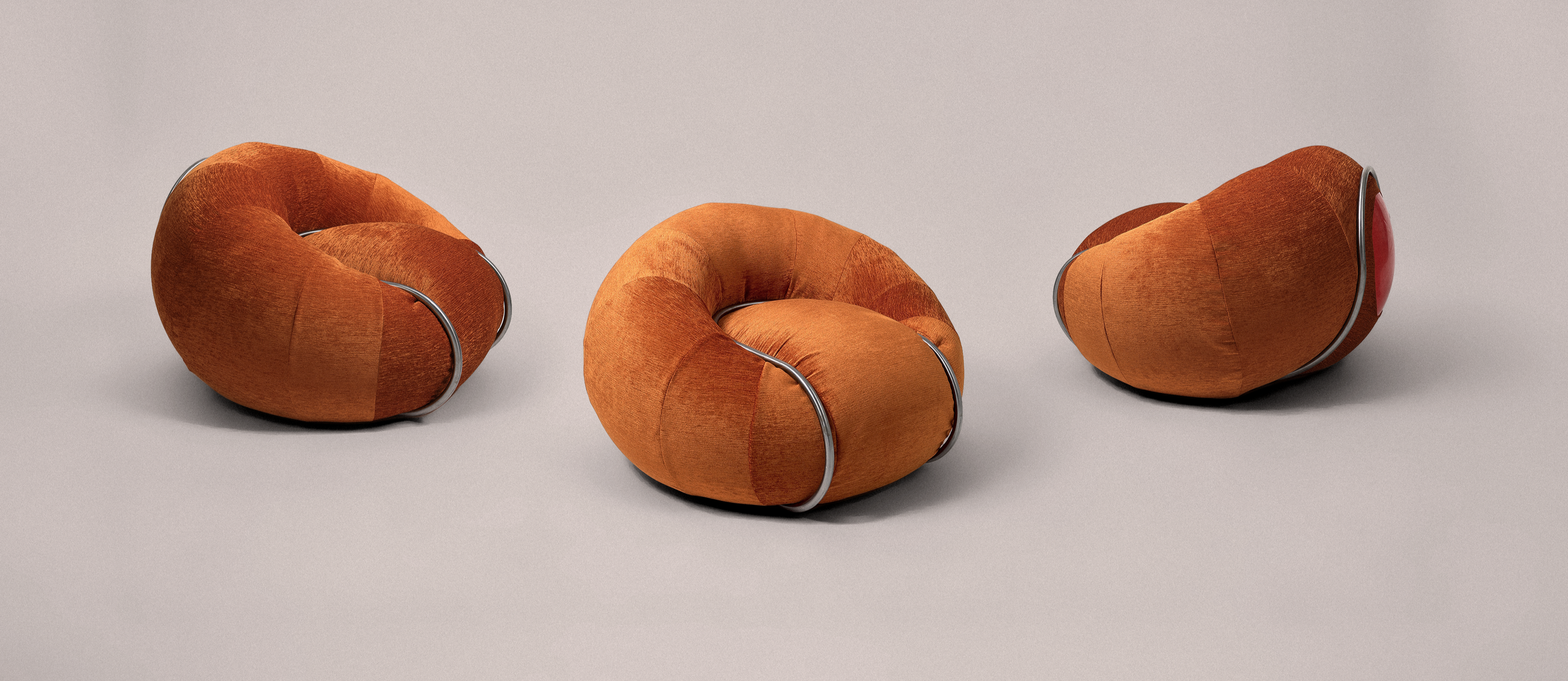
The chair translates the narrative structure of a sonnet through the octave, volta, and sestet. The octave establishes an idea, the volta introduces a shift in perspective, and the sestet develops or recontextualises what came before. Central to this structure is the volta: a turning point that changes how the preceding lines are understood.
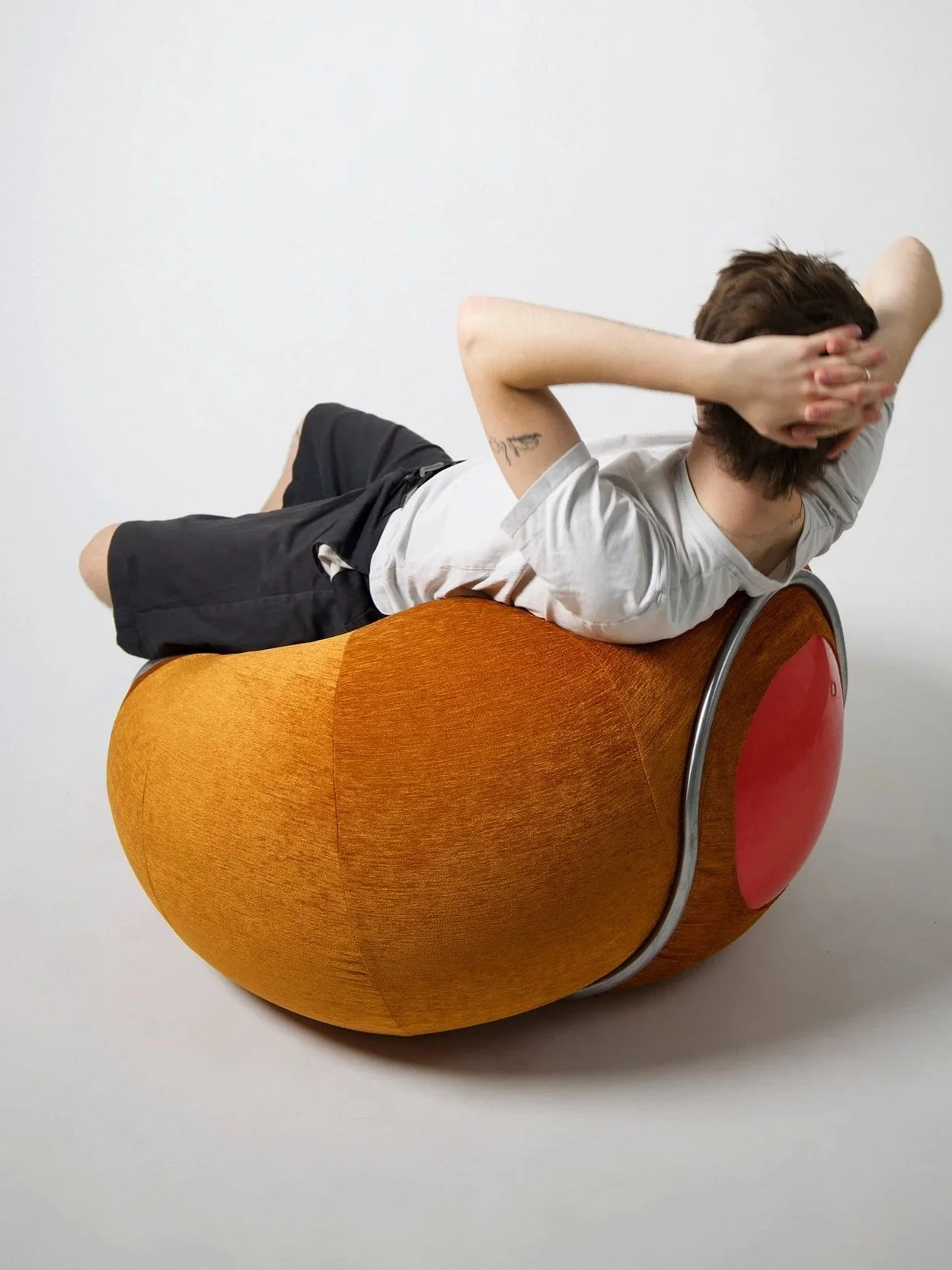
This narrative unfolds through movement around the chair, with each viewing angle corresponding to a stage of the poem. From the front, the octave presents what appears to be a conventional upholstered lounge chair. Moving to the side creates the volta, where a sudden material contrast begins to disrupt this initial reading and suggests that the object may not be what it first appears. At the rear, the sestet reveals its construction: the upholstered form is created by an exercise ball constrained within a bent stainless steel frame.
This final reveal recontextualises the chair’s initial appearance. A mass-produced object associated with exercise and activity becomes the source of a form associated with rest and leisure, while its geometry emerges not from a predetermined sculpted surface but through the interaction between the ball and the structure that constrains it. The viewer’s movement around the object therefore becomes a process of reading, allowing the chair’s construction, material relationships, and questions of authorship to unfold sequentially in the same way that a sonnet develops and reframes its meaning.